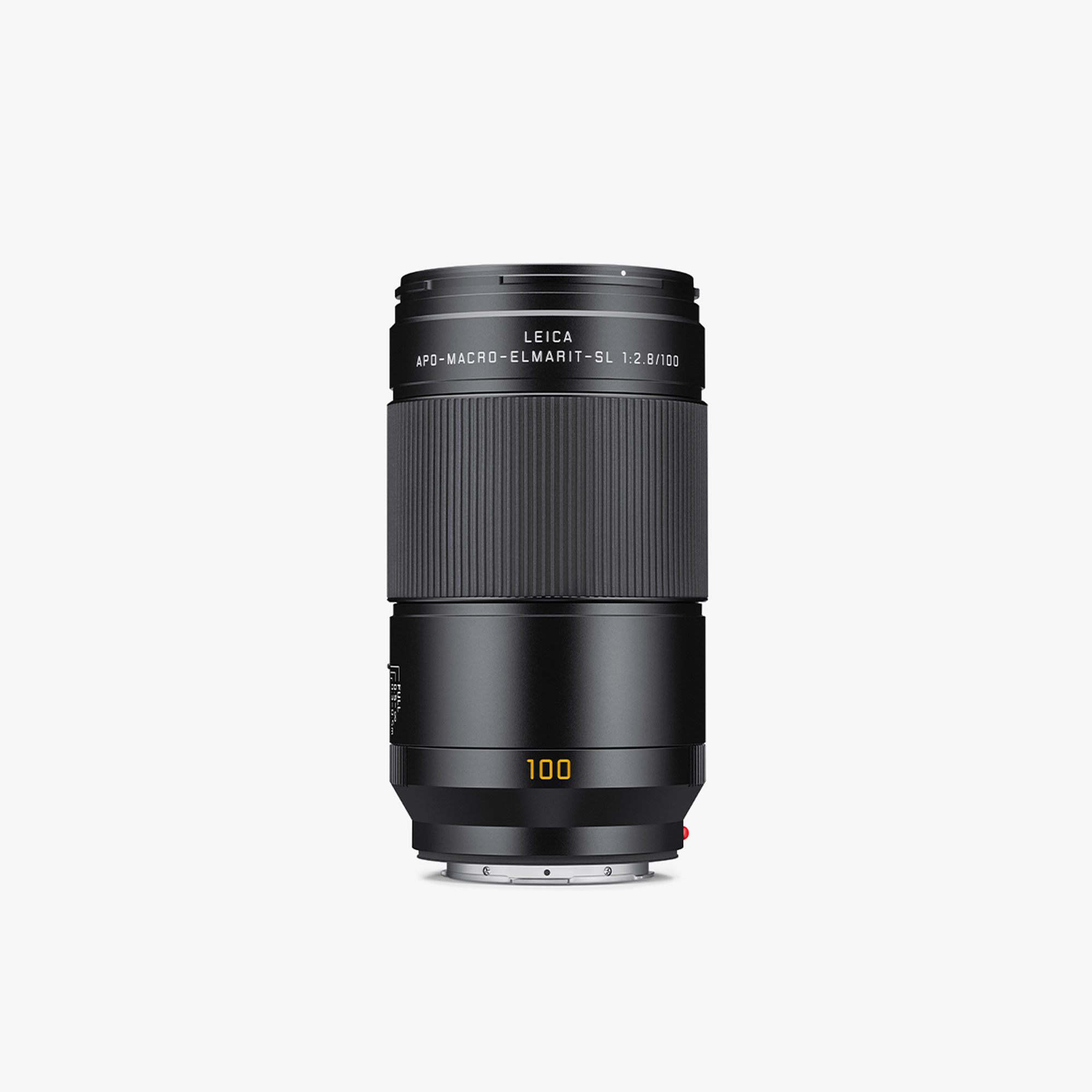
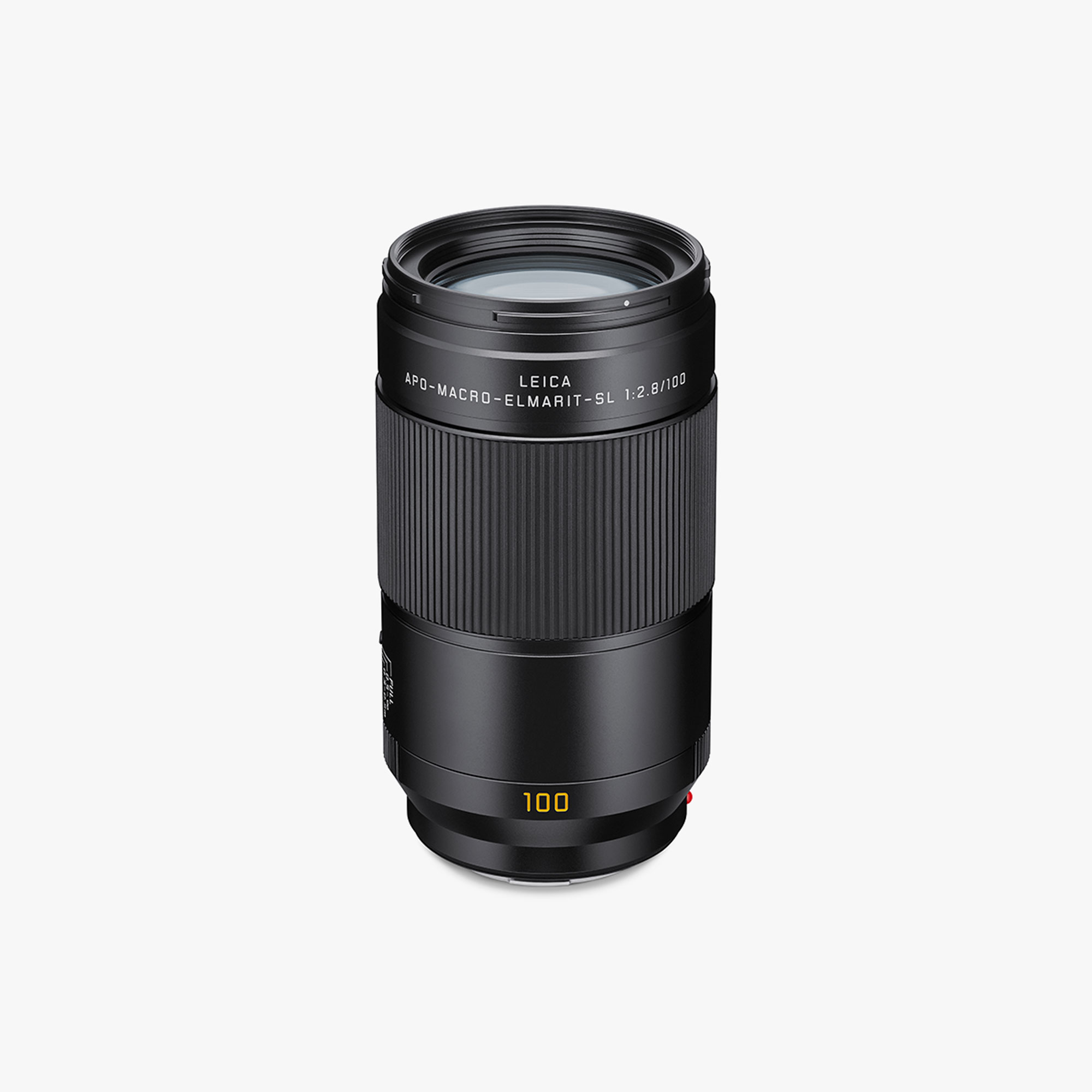
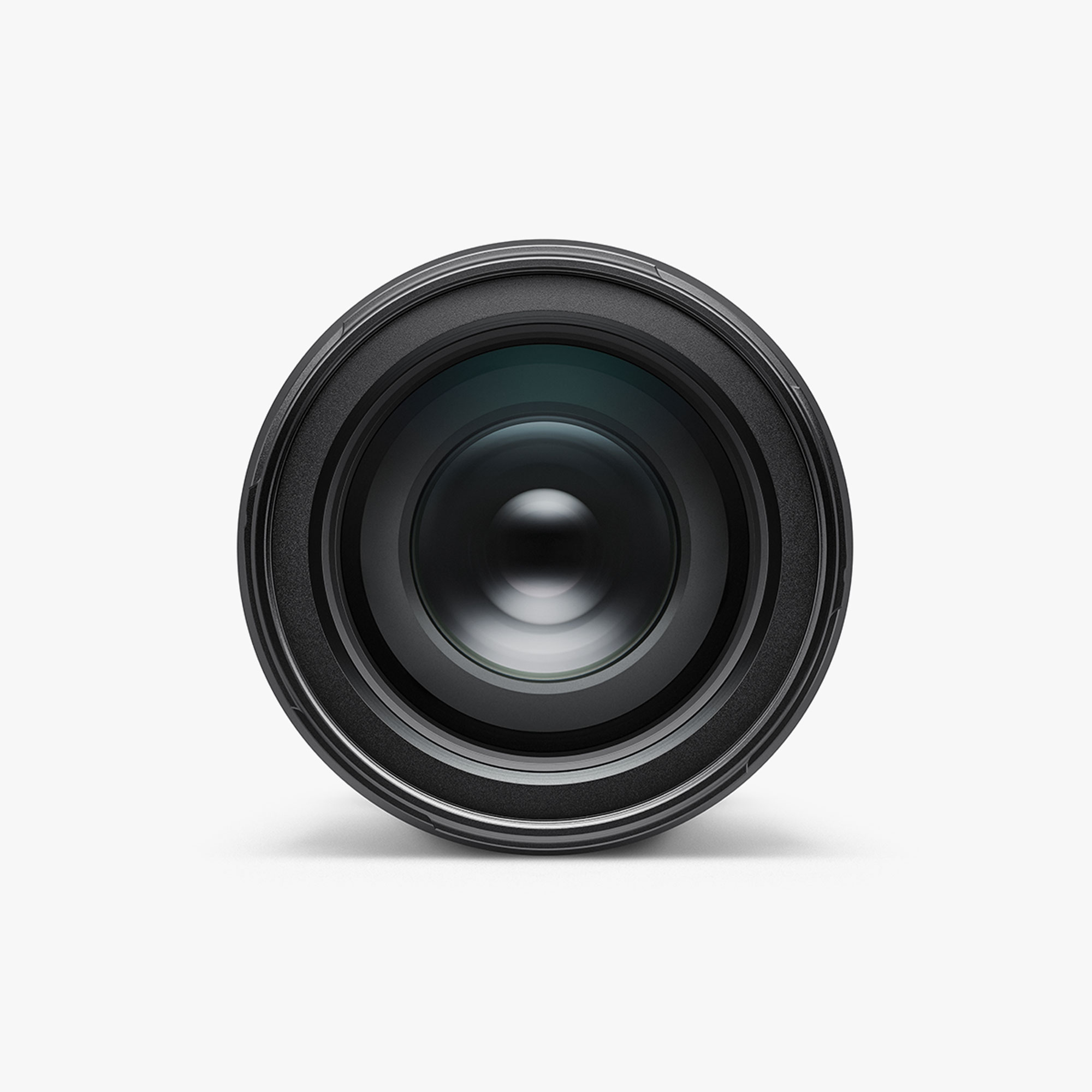
Leica APO-Macro-Elmarit-SL 100mm f/2.8
Lenses€ 2.450,00 (incl. VAT)
For Those Who Look Closer
Although macro and portrait photography are two different worlds, they have one thing in common: the familiar suddenly appears in a new light. A deeper structure that you had never noticed before. A characteristic that only becomes visible in the image. The APO-Macro-Elmarit-SL 100 f/2.8 lens bridges these two worlds, allowing each to unfold to its full potential. With a close focus distance of 30 cm, it opens up a new sense of intimacy, revealing details in the image that remain hidden to the naked eye.
-
Description
-
Additional information
-
Specifications
-
What's in the Box
The Strengths of the 100 mm SL-Lens
Near and Far – in Harmony
With a reproduction ratio of 1:1, this L-Mount lens captures fine patterns and surfaces with complete sharpness and minute detail. Apochromatic correction consistently eliminates chromatic aberrations to produce sharp contrast edges and the high-quality images typical of Leica. The fixed focal length of 100 mm also enables you to capture expressive portraits from a distance, with harmonious bokeh and clear separation between the subject and the background. This makes the APO-Macro-Elmarit-SL 100 f/2.8 ideal for capturing images that combine technical precision and creative expression.
Focus with Complete Control
In macro photography, in particular, focus is paramount: it determines what is visible, what recedes into the background and what the image ultimately conveys. The autofocus on the APO-Macro-Elmarit-SL works just as reliably for spontaneous portraits as it does for detailed handheld close-ups. The focus limiter allows the lens to be adapted specifically to the situation: it can be set to focus across the entire range from 30 cm to 50 cm, or from 50 cm to infinity. This enables fast, precise focusing in any shooting situation.
Design Details
The APO-Macro-Elmarit-SL 100 f/2.8 comprises 17 glass elements in 12 groups. Its apochromatic correction minimises chromatic aberrations across the entire focus range. This ensures high sharpness, clear contrast rendition and very accurate colour reproduction from close range to infinity. This advantage is particularly evident at a reproduction ratio of 1:1. With a minimum focusing distance of 30 cm, close-up shots can be captured almost at life size. This makes it possible to study the finest details and ensure precise reproductions. The robust, full-metal body is dust- and splash-proof, while the AquaDura® coating on the outer lenses repels smudges and makes cleaning easier in the field. Weighing 801 grams and measuring just under 137 millimetres in length, it is a powerful addition to the Leica SL-System.
| Camera System | SL System |
|---|---|
| Colour | Black |
Specifications
-
Angle of view (diagonal/horizontal/vertical) Full-frame (24 x 36 mm) 22.7°/19.6°/13° Lens system Number of lenses/groups 17 / 12 Position of the entrance pupil before the bayonet 36 mm Focus range 0.29 m to ∞ Focusing Setting Choose automatic (autofocus) or manual mode on the camera Smallest object field Full-frame: 23.9 mm x 35.9 mm Largest scale 1:0.997 Exposure compensation macro range 1:13 | 4.93 ft / 1.5 m | 3.13 | +0.2 EV
1:8.1 | 3.29 ft / 1 m | 3.25 | +0.32 EV
1:7.1 | 2.96 ft / 0.9 m | 3.3 | +0.36 EV
1:6.2 | 2.63 ft / 0.8 m | 3.36 | +0.42 EV
1:5.2 | 2.3 ft / 0.7 m | 3.45 | +0.49 EV
1:4.2 | 1.97 ft / 0.6 m | 3.58 | +0.6 EV
1:3.2 | 1.64 ft / 0.5 m | 3.79 | +0.76 EV
1:2.2 | 1.31 ft / 0.4 m | 4.21 | +1.06 EV
1:1.7 | 1.15 ft / 0.35 m | 4.03 | +1.34 EV
1:1 | 0.968 ft / 0.3 m | 5.75 | +1.96 EVThe effective aperture is reduced as close focusing distances grow shorter.Aperture Setting/Function Electronically controlled aperture, setting on the camera; half-stop or third-stop increments can also be set Smallest aperture 22 Number of blades 9 Firmware Lens firmware can be updated via the camera Coating Hydrophobic Aqua-Dura® coating on external lenses Material Aluminum all-metal housing, black anodized, protected against dust and splash water (IP54) Bayonet Leica L bayonet mount with contact strip Filter thread E67 Lens hood Male bayonet for lens hood (included in the scope of delivery) Dimensions Length Approx. 137 mm/187 mm (without/with lens hood) Diameter Approx. 77 mm/82 mm (without/with lens hood) Weight Approx. 801 g/862 g (without/with lens hood)
What's in the Box
- Leica APO-Macro-Elmarit-SL 100mm f/2.8
- Lens Hood
- Lens Cap
- Carrying Bag
- Limited 2-Year Manufacturer Warranty